African Reparations Movement UK
The African Reparations Movement (ARM) UK served as the foremost national organisation for Reparations in Britain, and through its connection to the Organisation of African Unity, was the UK wing of the global movement for Reparations. Active from 1993 until Grant’s death in 2000, ARM had a unique structure and programme of activities. It benefitted from the lengthy experience of Grant and others, in Britain’s anti-racist and community activist networks, in that it was structured in such a way to negate past experiences of organisational splits and internal conflicts. This was articulated in the ARM’s Activities Letter written by Grant in February 1996: “In the first phase we have concentrated on the structure which is unique – this due to the black British “disease” of splitting and in-fighting which has prevented us from building a strong national organisation”. ARM’s structure consisted of a board of trustees, with Grant as chairman, a management committee and secretariat responsible for the general running of the organisation, and various subcommittees to represent different sections of the population and their perspectives, including a student committee, youth committee, musicians committee, sports committee and so forth.
BG_ARM_1_2 ARM activities letter
This document contains papers presented at the 1990 World Conference on Reparations to Africa and Africans in the Diaspora, outlining the legal and historical basis for reparations claims related to slavery and colonial exploitation. It is useful for understanding Bernie Grant's campaign as it provides context on the global reparations movement, emphasizing justice over charity and highlighting precedents that support calls for recognition and compensation for African descendants.
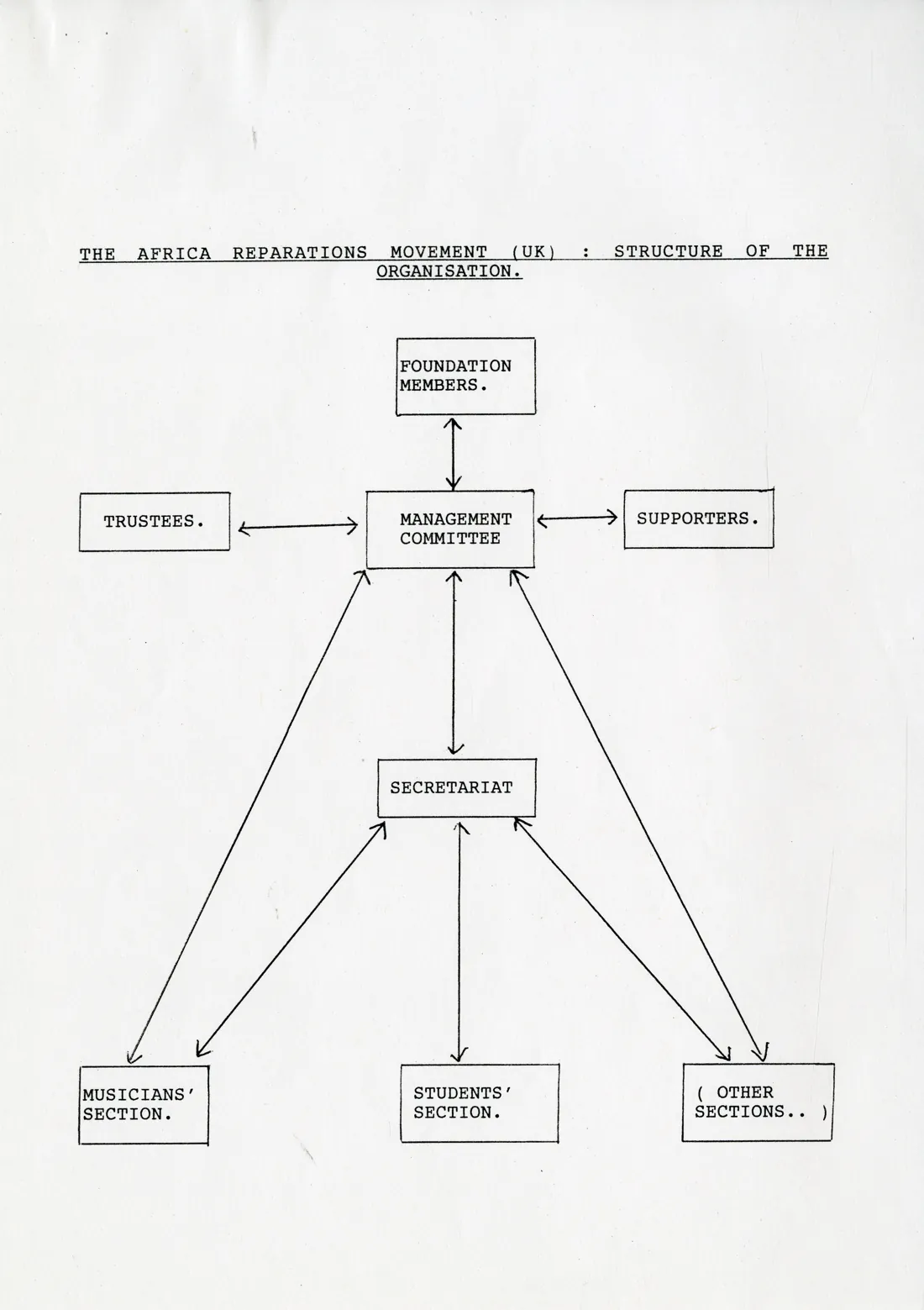
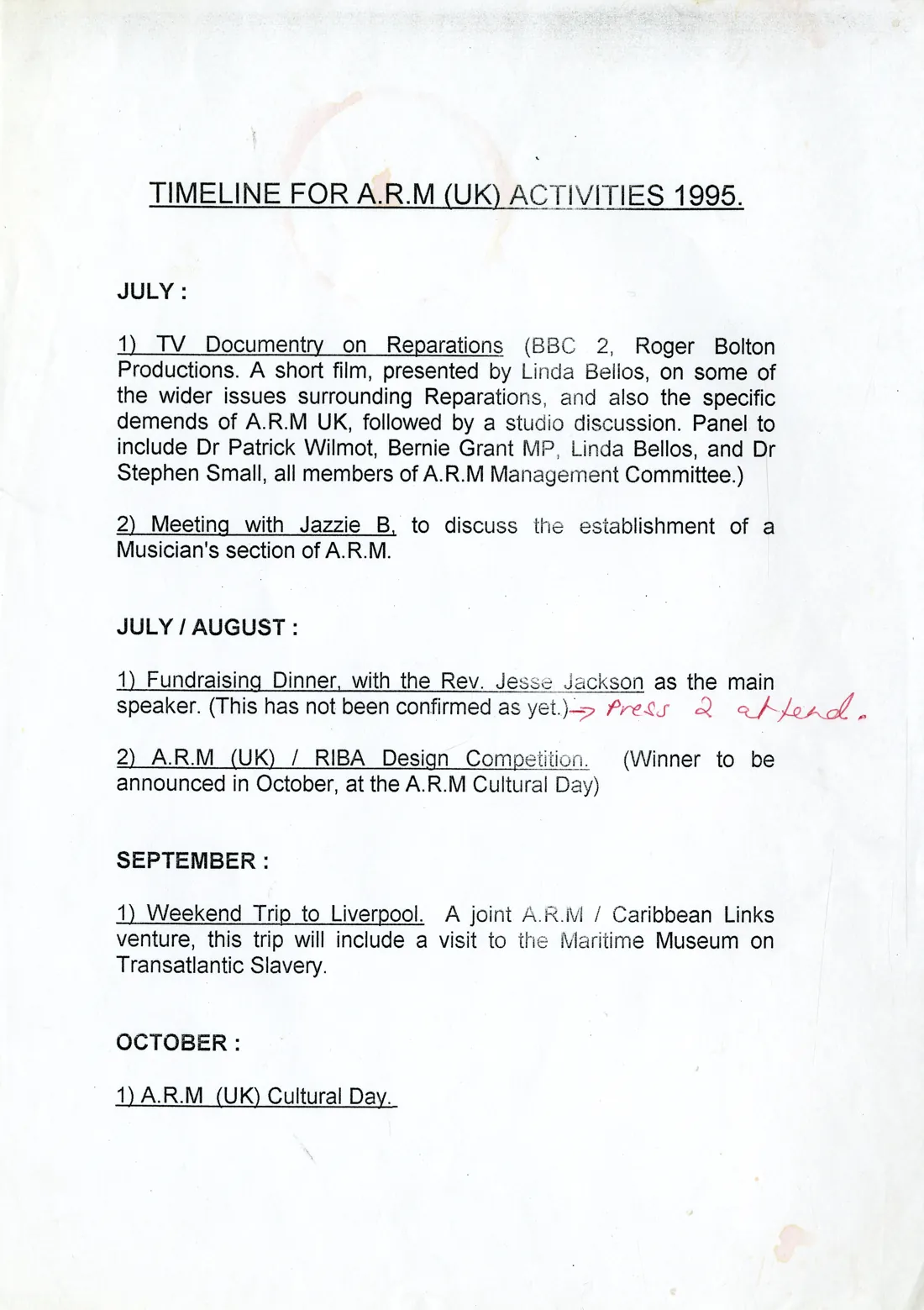
The ARM published information sheets and regularly wrote to supporters keeping them updated on the latest activities. Alongside this, ARM attempted to conduct research into the historical legacies of slavery and colonialism in Britain. The group utilised its connections to notable figures of Britain’s Black communities made possible through Grant’s public profile, and aimed to mobilise entertainers and sports figures to support ARM’s work and the wider Reparations movement. Importantly, none of this was funded, and was largely run from Grant’s constituency office, using volunteers, before the age of e-mails and websites.
Perhaps its most significant actions were around the restitution of ill-gotten African artefacts in the position of Britain’s museums and galleries, and in private collections. The famous – and ongoing – campaign for the return of the Benin Bronzes, saw ARM take a frontline role. During the period in which Britain and other European powers turned their attentions from slavery to the Scramble for Africa, British troops conducted a military invasion on the ancient kingdom of Benin (located in present-day Nigeria) in 1897, stealing artworks which held invaluable cultural significance, creative value and craftsmanship.
he British Museum acquired the largest collection of what have become known as the ‘Benin Bronzes’, but they were also scattered across the Western world, and some were lost or destroyed during the Second World War. The Nigerian government were so desperate for the return of the bronzes, that in 1980 they spent £800,000 (equal to approximately £4,300,000 in 2024) to acquire just four bronzes and a Yoruba mask at a London art auction. ARM took up this issue of restitution throughout the late 1990s, conducting historical research into how Britain acquired the Bronzes in the first place, drew up a list of museums and galleries which housed them, and wrote to them demanding their return to Nigeria.
BG_ARM_1_2 The British & the Benin Bronzes
This document compiles papers from the 1990 World Conference on Reparations to Africa and Africans in the Diaspora, outlining the legal and moral arguments for reparations related to slavery and colonial exploitation. It is valuable for understanding Bernie Grant’s campaign as it provides context on the global reparations movement, highlighting the justice-based demands that informed his advocacy for African and Diaspora communities.
The ARM organised several pickets outside the British Museum and Museum of Mankind, to protest against its retention of Benin treasures and other looted items from Africa. In July 1994, in response to an ARM picket and campaign for the British Museum to return the stolen artefacts, the British Museum’s PR department wrote a response letter entitled ‘The Return of ‘Cultural Property’, refusing to relinquish ownership of the items, claiming a 1753 act of parliament requires them to “ensure that the collections are preserved for the benefit of international scholarship and the enjoyment of the general public life”. This line of argument is still used by museums and arts and heritage institutions today. In late 1996, the Scone of Stone, a famous oblong block of stone which had been used to crown Scottish monarchs since the 13th century, was successfully returned to Scotland by the British Government, 700 years after its theft. Bernie Grant released a press statement, which highlighted the hypocrisy of repatriating this stolen item, and refusing to repatriate those looted from Africa. Of this, Bernie Grant stated “what goes for one must go for all”.
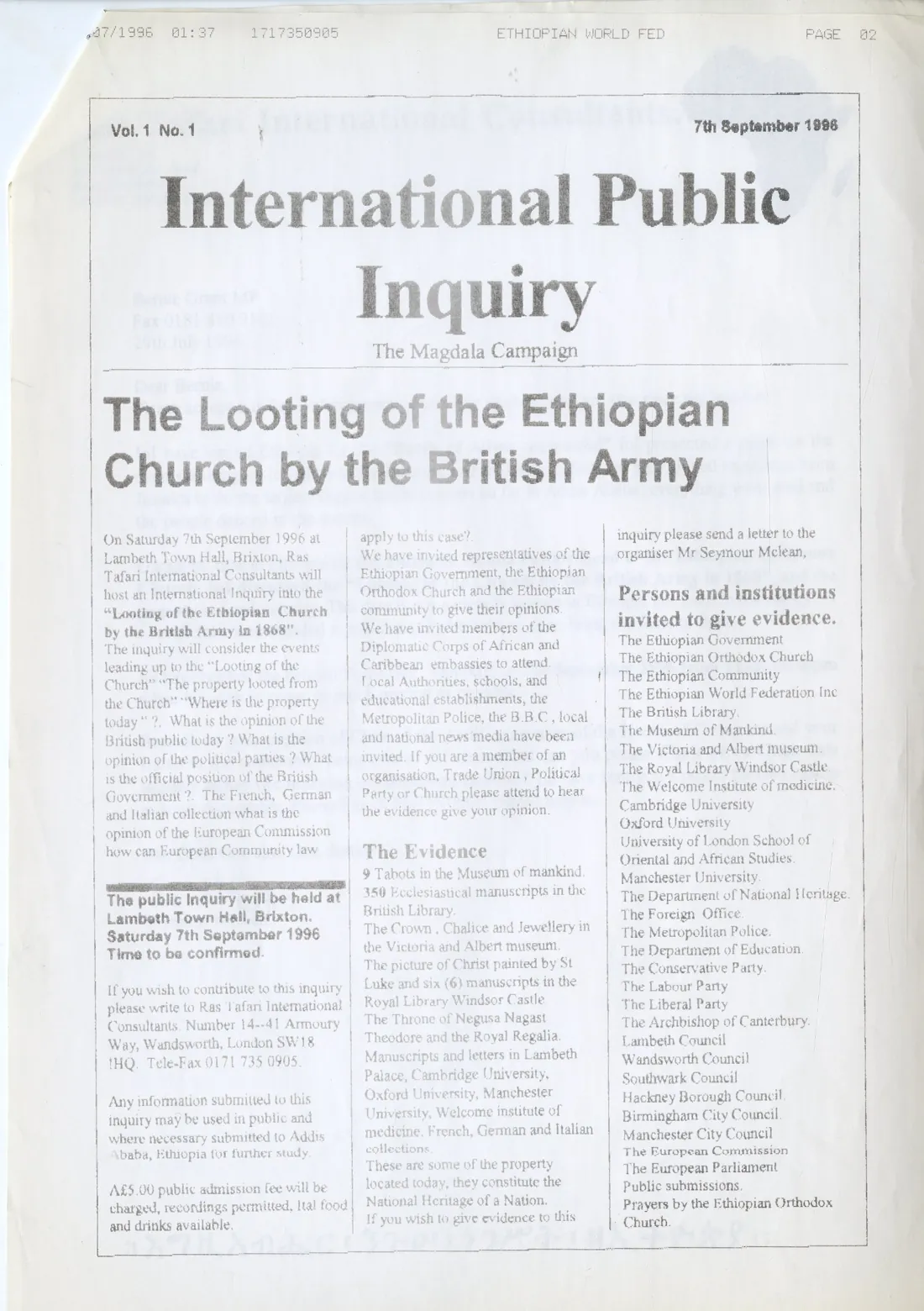
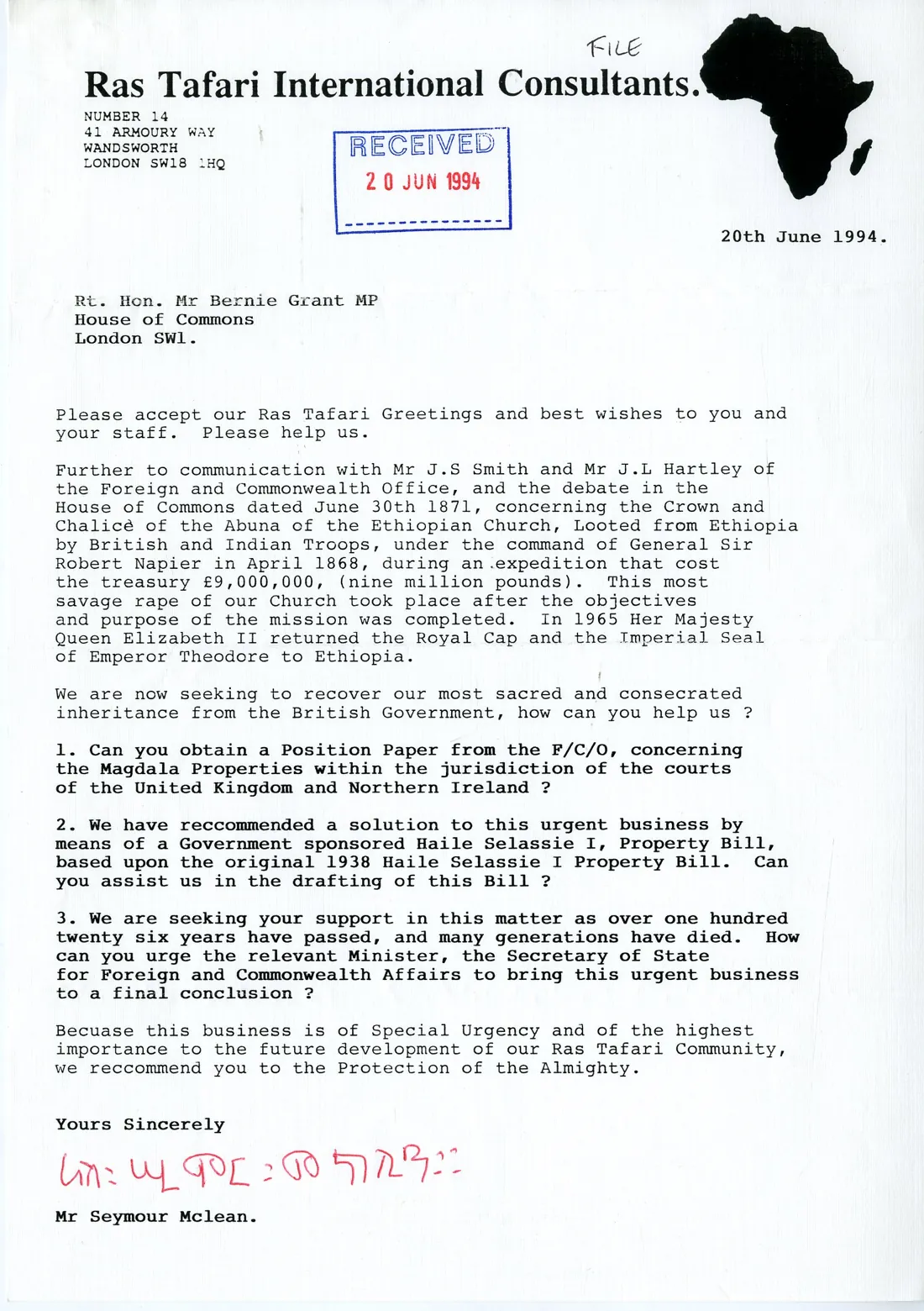
In the same vein, ARM was also involved in campaigns for the return of Ethiopian treasures, and in particular those treasures taken during the looting of a Christian church in Maqdala, Ethiopia in April 1868 by the British Army, on behalf of Queen Victoria. The Ras Tafari International Consultants, and in particular Ras Seymour Mclean (also known as the Books Liberator) spearheaded these efforts and sought Grant’s help in persuading the British Prime Minister, the United States government, and the British Library who held many Ethiopian ancient scripts, to return them back to Ethiopia. Ras Seymour Mclean documented his struggles with the British authorities, and in Spring of 1995 his house was subjected to a raid by armed police. Through his campaigning he’d found both the British Library and government resistant to help in his mission to return the treasures, and ‘liberated’ many ancient scripts from the British Library himself. He passed away in 2014, but as he pointed out, Maqdala items looted from Ethiopia in 1872, including a gold crown and chalice, are also held by the V&A museum .