
Back to Fighting Racism: Britain and Europe
Arts, History and Heritage
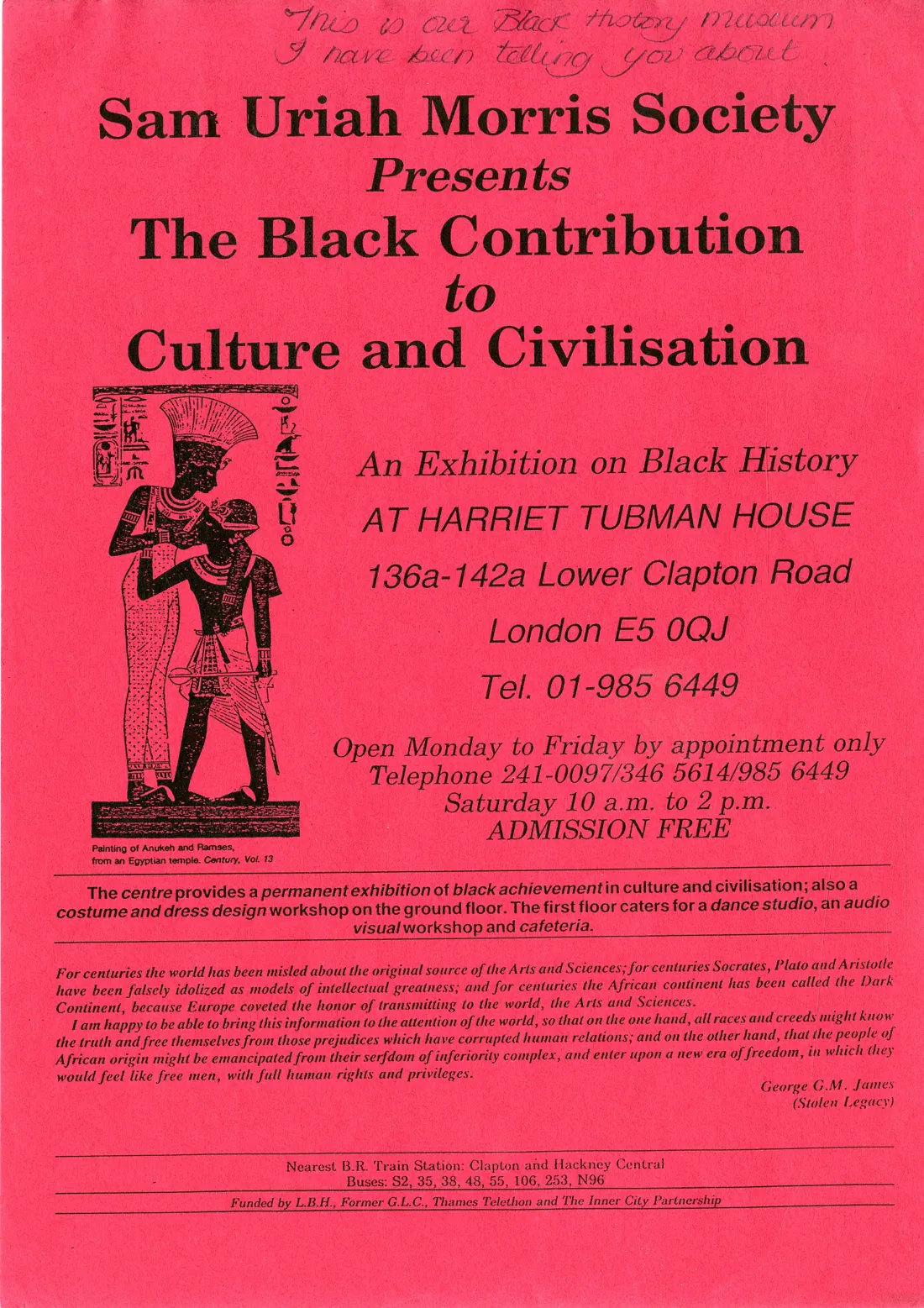
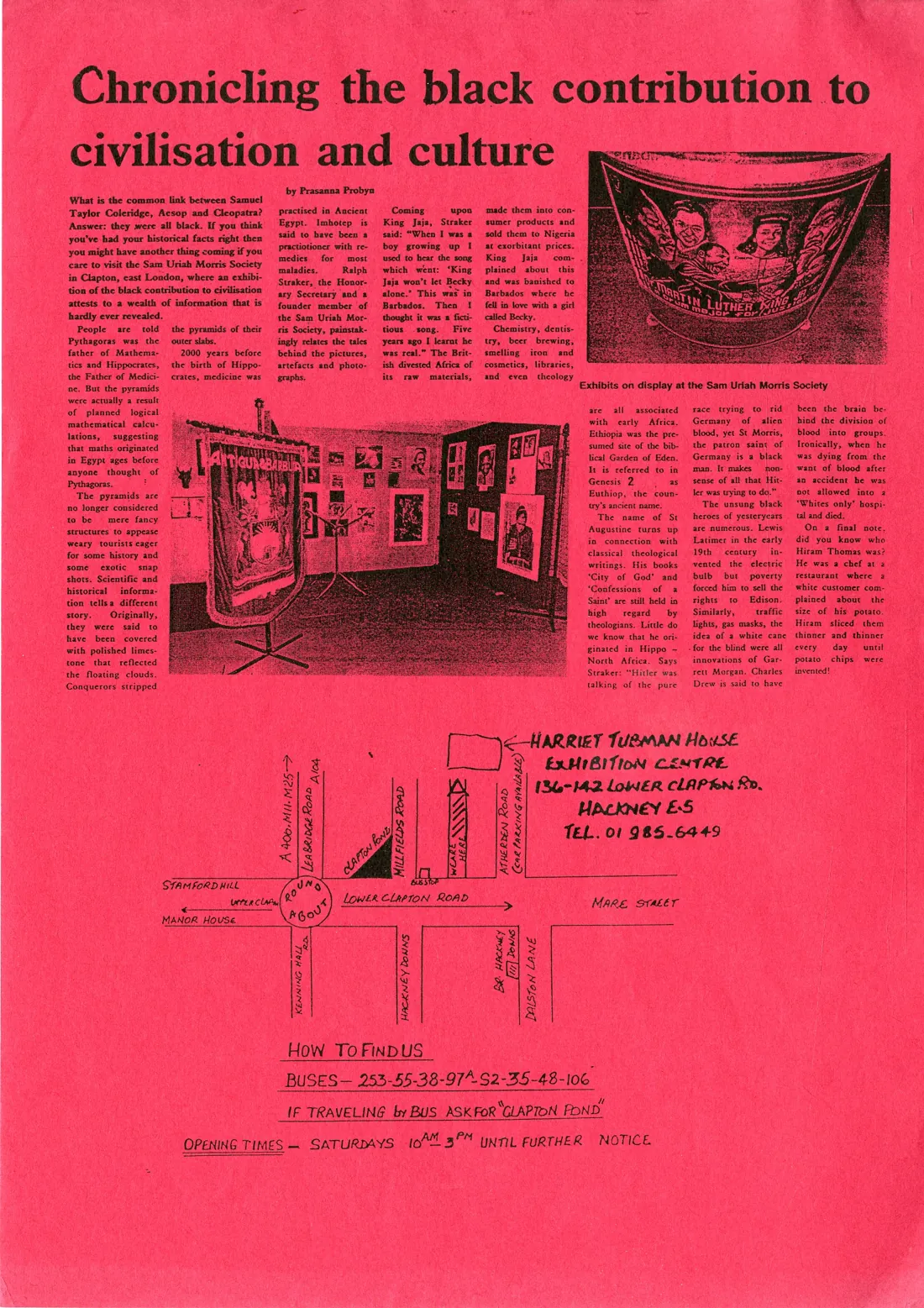
Grant’s archive offers a glimpse into the initiatives that were ongoing in the late 20th century, with the goal of combatting the dearth in available resources, heritage institutions and public knowledge projects, on the histories and heritage of Black people in Britain. One of these such initiatives was organised by the Sam Uriah Society, at Harriet Tubman House in Lower Clapton, East London. This poster, featured in the Bernie Grant archive, publicised the centre’s exhibition entitled ‘The Black Contribution to Culture and Civilisation’. It was a permanent exhibition, and alongside it the centre offered a dance studio, costume and design workshop, AV facilities, and a cafe. The centre operated until 2013.
The year 1995 marked the 50th anniversary for Victory in Europe (VE) Day. The Houses of Parliament were deeply involved in coordinating commemoration events throughout Britain to celebrate 50 years since the end of World War II. As such, a steering committee was set up, chaired by Conservative Party politician Viscount Cranbourne, who was serving as MP for Dorset at the time. Despite the expansive programme of celebratory events drawn up by this committee, there was a noticeable lack of mention pertaining to the contributions of African and Caribbean people to Britain’s involvement in both World Wars, and indeed in the Armed Forces at the time of the anniversary. This absence was pointed out by many, including Bernie Grant, who’s archive illuminates this push for better acknowledgement of African and Caribbean people to Britain’s wartime efforts. In a letter debriefing a meeting of the WWII Commemoration Team in November 1994, presumably drafted by Grant’s office, it was revealed that the team had no plans to extend invites to Caribbean, East or West African representatives for a VE may event. The letter outlined examples of African and Caribbean contributions to WWII, such as the £2.8 million public donations from Trinidadians for the war effort, as well as the numerous combatants and casualties suffered.
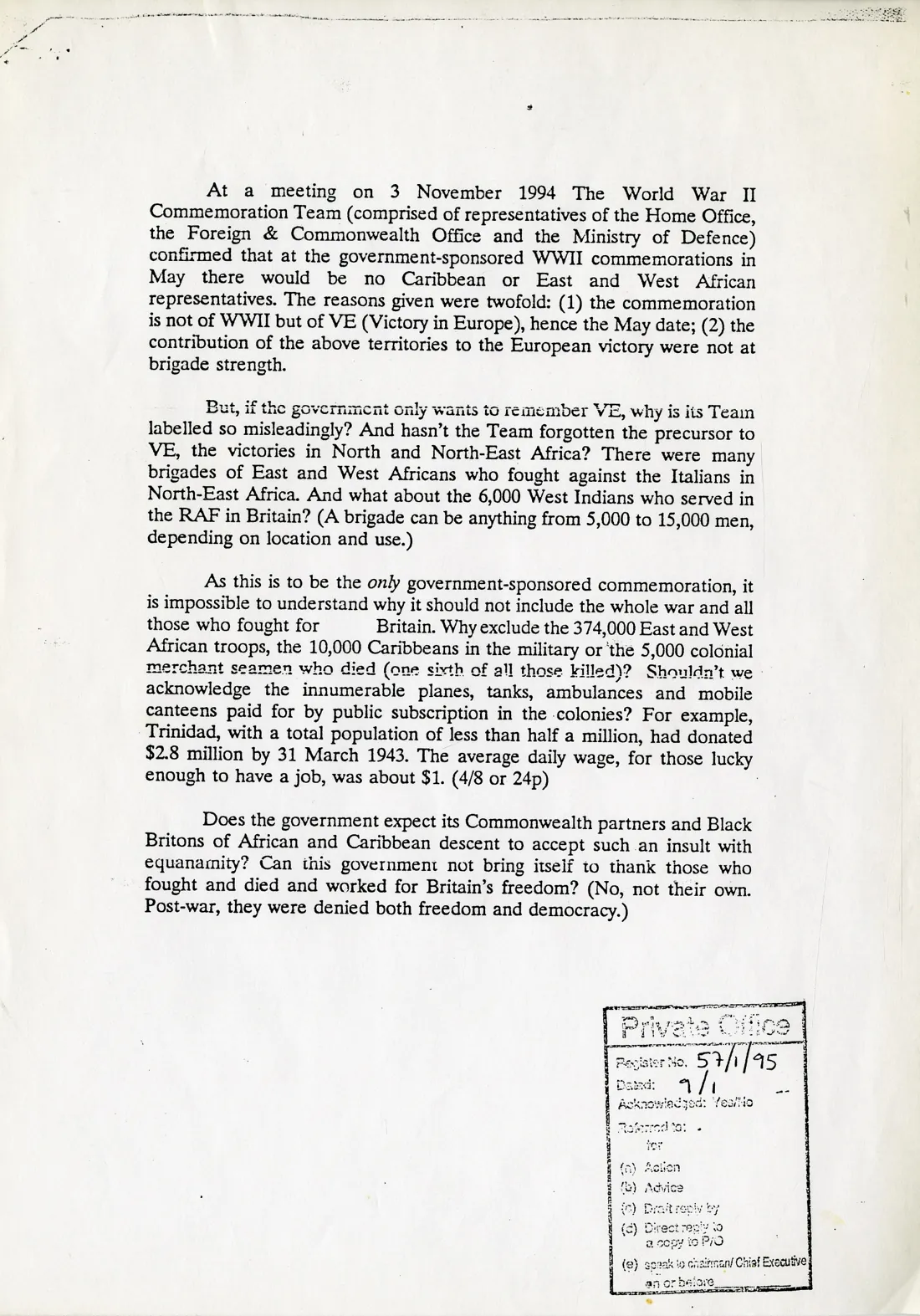
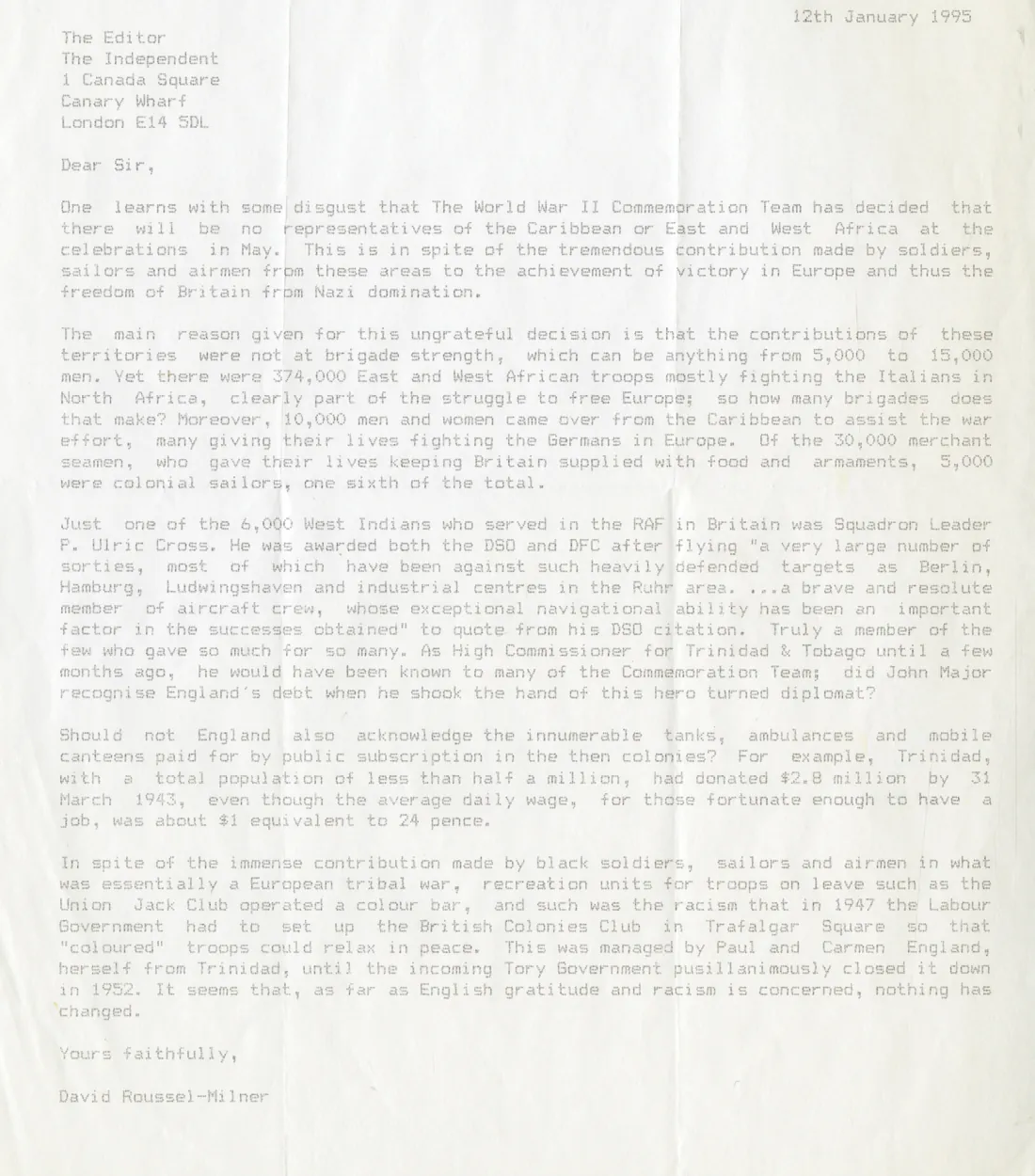
The letter asked whether the government could expect people of African and Caribbean descent to accept “such an insult with equanimity”. Of course, Grant was not the only one to raise the issue of representation in the VE celebrations, political activist and journalist David Roussel-Milner, who wrote for publications such as the West Indian Gazette and The Voice, wrote to the Editor of the Independent to express his outrage at the committee’s decision, similarly highlighting the arbitrary reasoning provided by the team for this decision, being that African and Caribbean contributions were not at “brigade strength”. The archive contains another letter dated February of 1995 by David Soames MP, then serving as Minister of State for the Armed Services, responding to Bernie Grant’s insistence that African and Caribbean representatives receive invites to state-organised commemorations. In this, David Soames reassured Grant that Jamaica and Trinidad’s Heads of State had been invited, as well as 12 other Commonwealth Heads of State. This response reveals that the criticisms by Grant, Roussel-Milner and others likely prompted a better inclusion of African and Caribbean people in the commemorations.
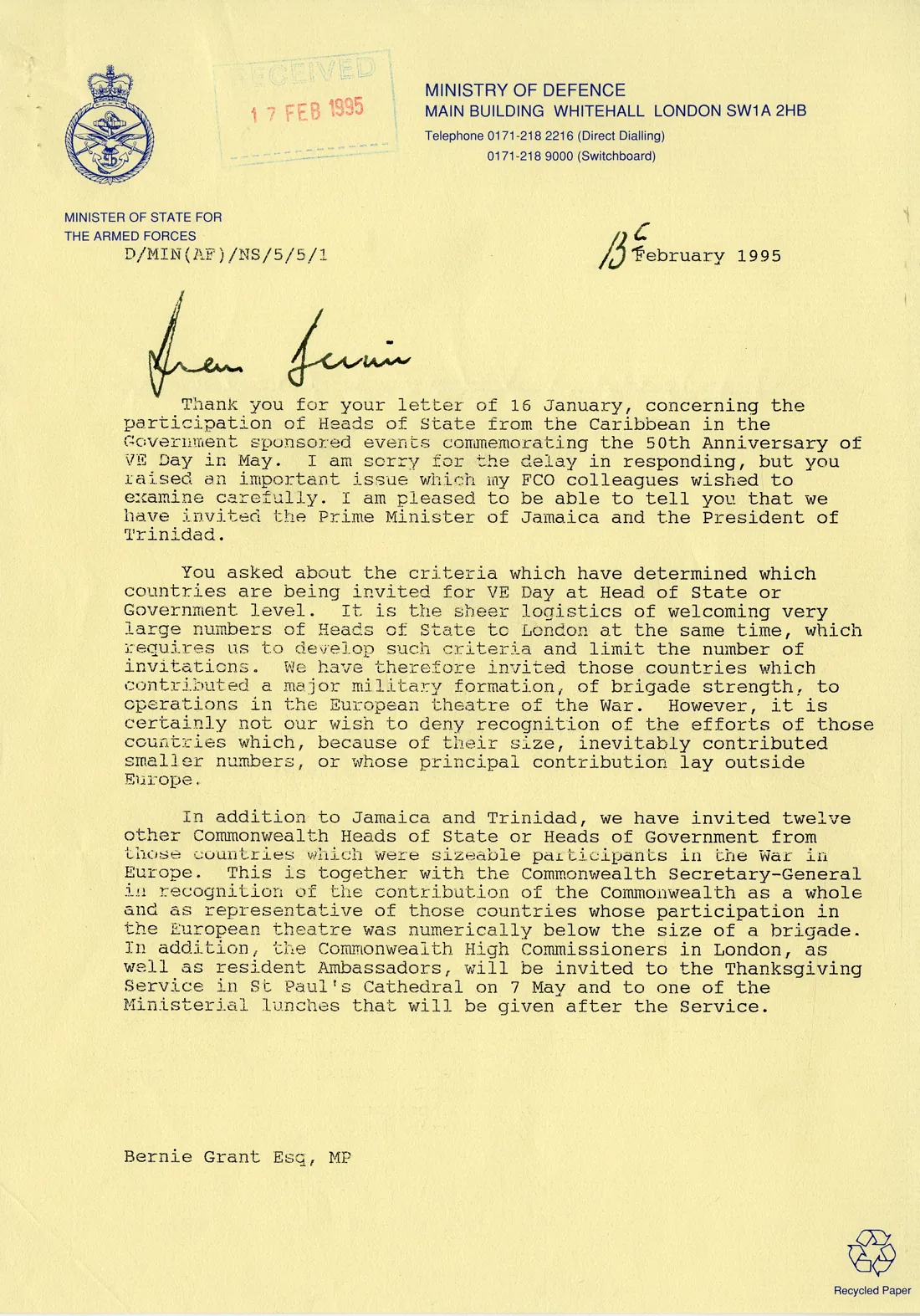
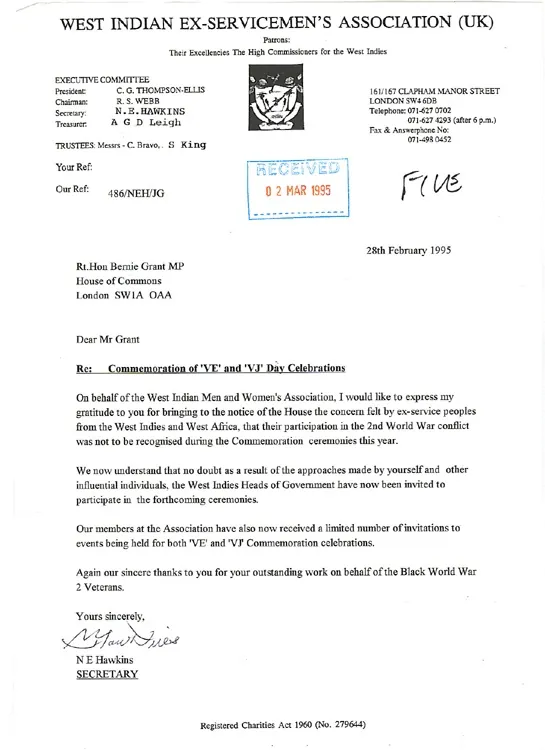
The West Indian Ex-Servicemen’s Association wrote to Grant to thank him for bringing their concerns around the erasure of historic contributions, to the attention of the House of Commons. This campaign around VE Day is therefore a useful example of Grant’s use of his position as an elected representative, to advocate for the recognition of the role of black people in British History. (However, it was not until 22nd June (Windrush Day) of 2017, that a memorial to specifically commemorate African and Caribbean service personnel in both World Wars, was commissioned and unveiled in Windrush Square, Brixton.)
