Back to Politics: Local and Central Government
Council Career
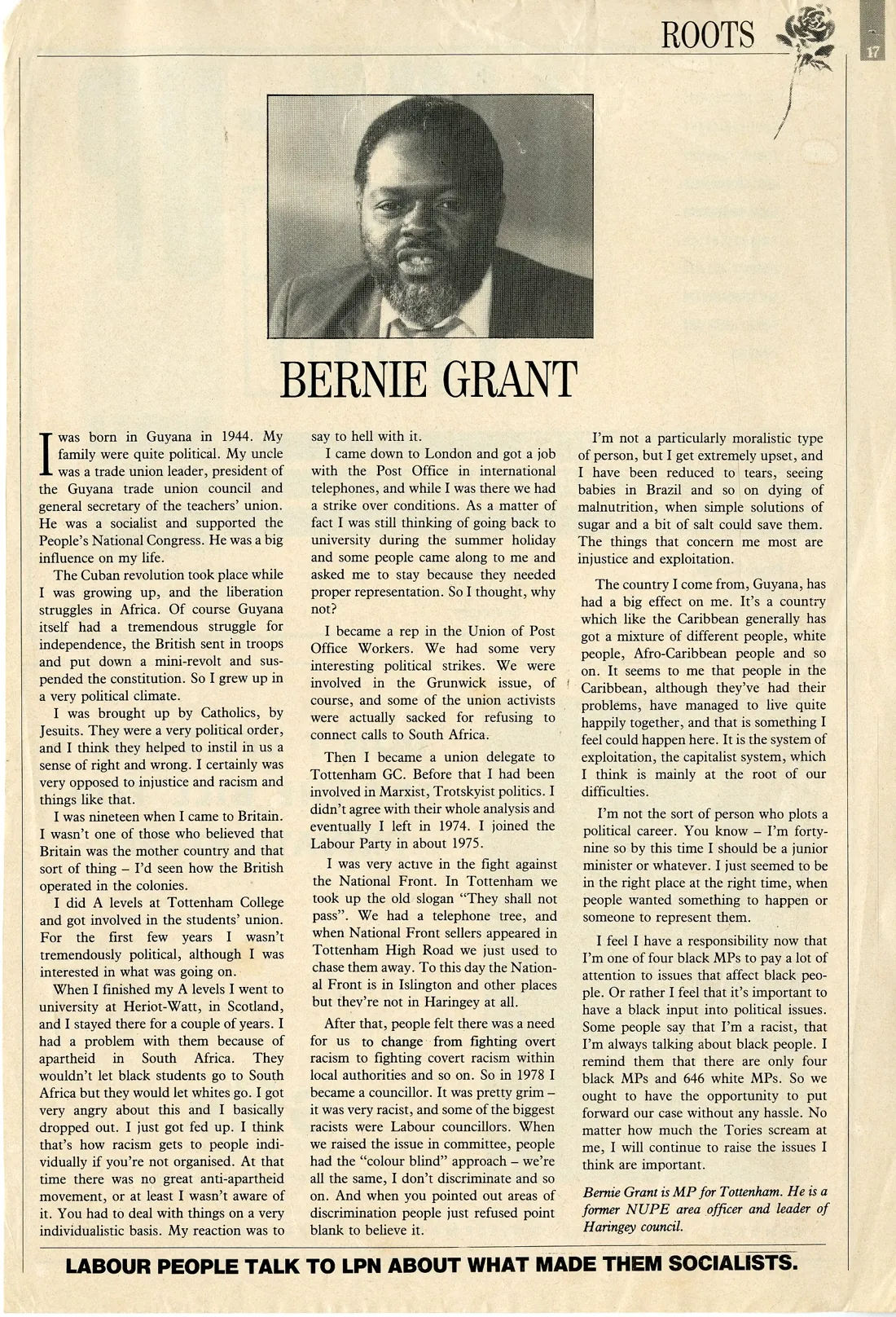
In 1978, Bernie Grant was elected Councillor for Bruce Grove Ward in the Haringey Borough. His decision to enter electoral politics was inspired by his frustration with what he saw as the limited impact of the far left and trades union movements. He had been active in these movements in a number of ways, including the fight against the National Front during its peak of influence throughout the 1970s. Then the activist landscape changed, as Grant stated: “After that, people felt there was a need for us to change from fighting overt racism to fighting covert racism within local authorities and so on”. Having already achieved a reputation as a committed community activist and trade unionist, Grant quickly became an influential member and trusted by the community in his council role. His approach to this work related to his principle of “service to all the people of Haringey”. His arrival in local government coincided with the arrival of Margaret Thatcher’s Conservative government and it’s attempt to limit the scope and spending power of local councils. It also coincided with the formative radicalism of the Greater London Council led by Ken Livingstone from 1981. Much of Grant’s early work as a councillor therefore centred on protecting services in the face of cuts to local authority services, for example arguing to maintain a policy of no-rent rises, and steadying the cost of 45p for school meals with improved health quality.
BG_P_11_5_2 Black Focus on Elections
This document is a collection of papers presented at the 1990 World Conference on Reparations to Africa and Africans in the Diaspora, providing detailed arguments and historical precedents for the demand for reparations related to slavery and colonial exploitation. It is useful for understanding Bernie Grant's campaign and broader Black political activism by contextualizing the reparations debate within global justice movements and showcasing the legal and moral foundations of claims made by people of African descent.
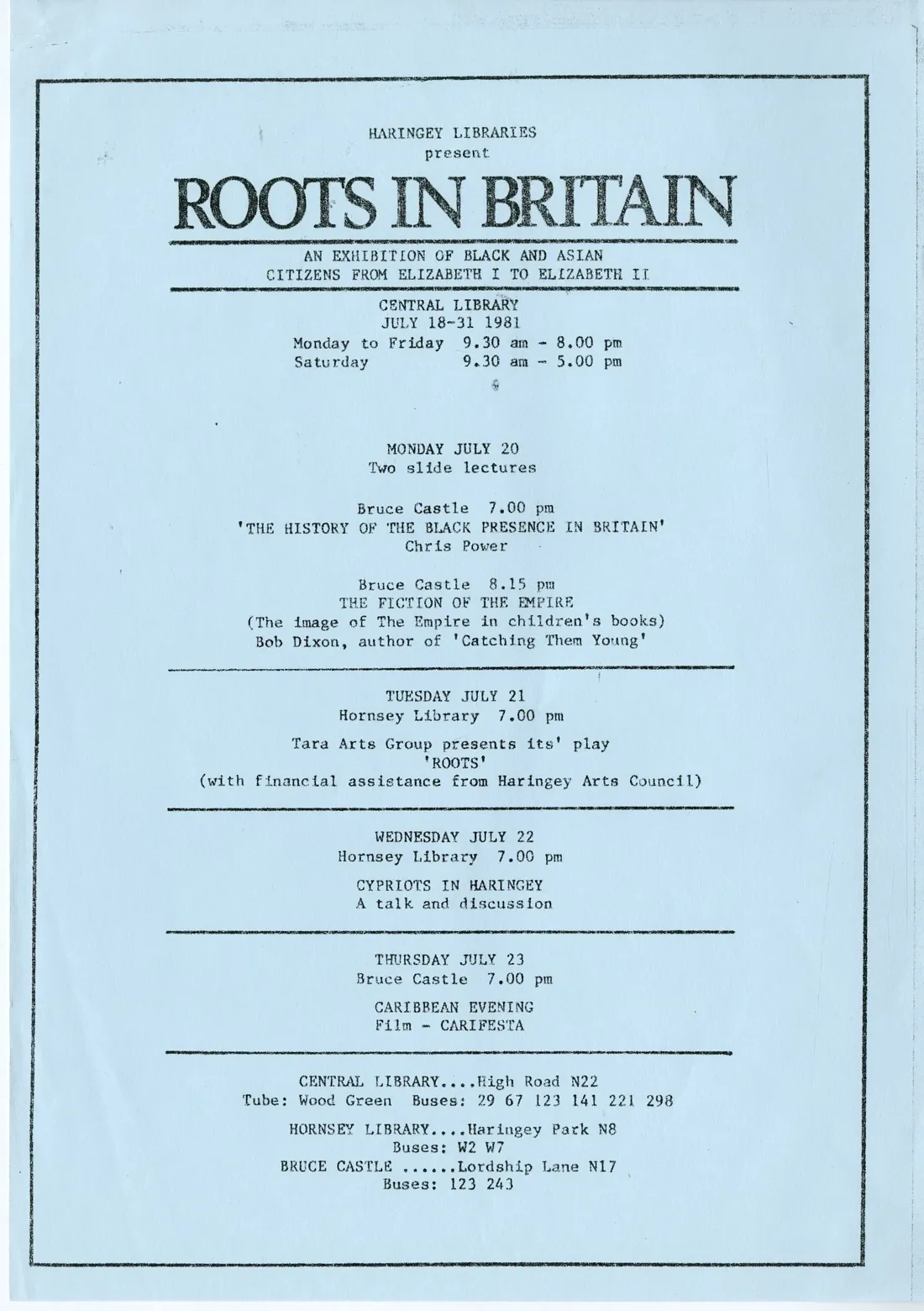
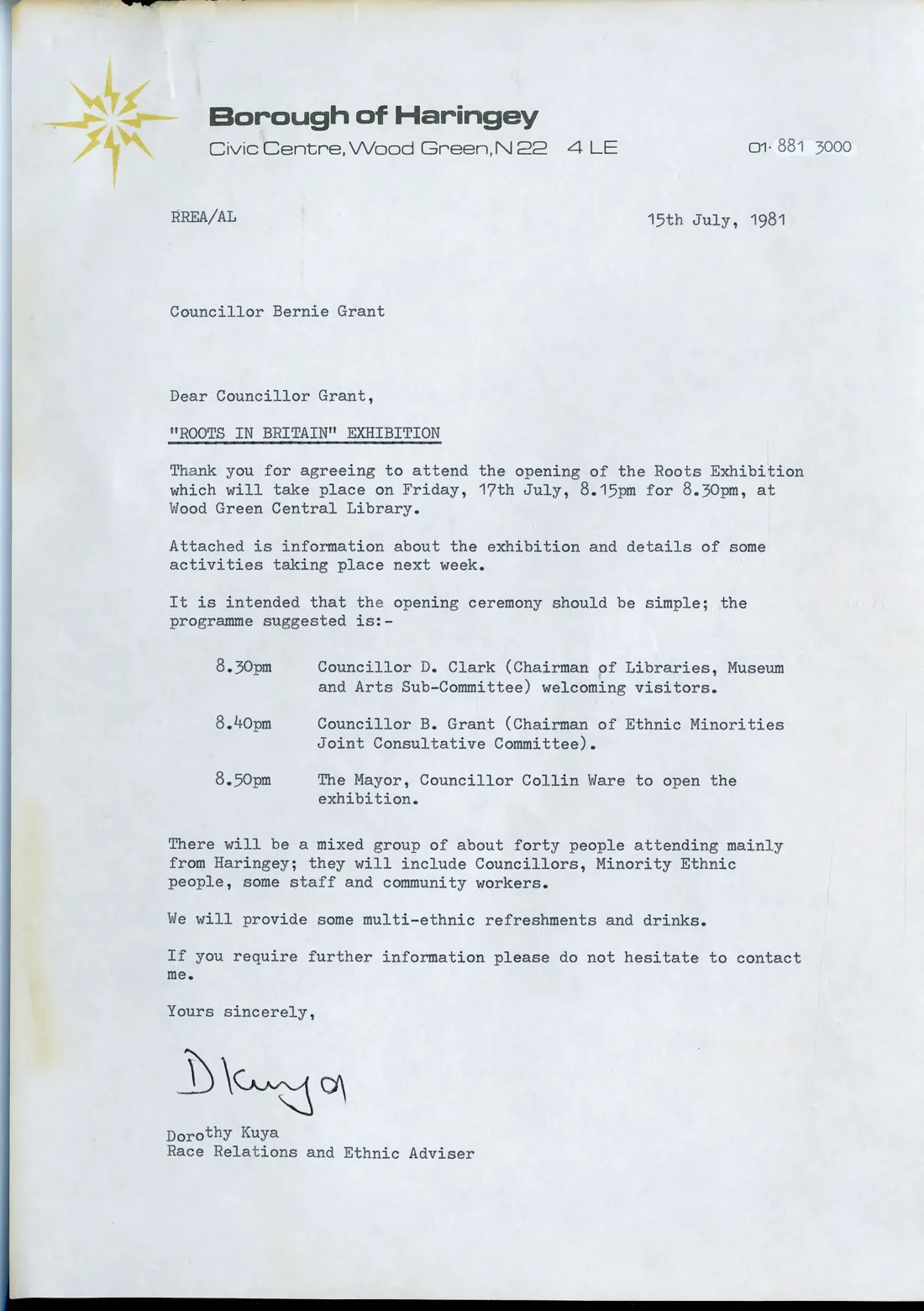
In the early days of his career in local government he chaired various committees, with his efforts being geared towards addressing institutionalised inequalities, and focusing on involving historically excluded communities in decision making – often to the chagrin of long standing Labour councillors. These committees included the Public Works committee, Community Development committee, Further Education Sub-Committee, and the ground breaking Ethnic Minorities Joint Consultative Committee. Alongside committee chairing, Grant also led on, or supported, a number of community projects which set out to empower members of the local community, in particular those marginalised sections such as Black people and ethnic minorities, immigrant groups, young people, members of the LGBTQ+ community, council tenants, and more. One such innovative project was “Roots in Britain: An Exhibition of Black and Asian Citizens from Elizabeth I to Elizabeth II”, held at Haringey Libraries in the Summer of 1981. The timing of this project is important to acknowledge, taking place in the aftermath of the New Cross Massacre, and the ‘81 Brixton riots which was triggered by racist policing toward Black youth. This exhibition, organised by Race Relations Advisor and pioneering activist Dorothy Kuya, with the input of Grant, is the first known public exhibition on Black British history. (Bernie Grant had be influential in appointing the influential Dorothy Kuya in 1979 as the first ever local authority race equality adviser) Alongside the exhibition itself, the project included a series of film screenings, events and talks, including one by Chris Power on ‘The History of the Black Presence in Britain’. Power was key in creating change in the education system and school curriculum, exemplified by his work in setting up a Black History course at Tulse Hill School, in South London.