
Archive item
Ethiopian World Federation inc. Draft Strategy on Reparations and Repatriation
About this item
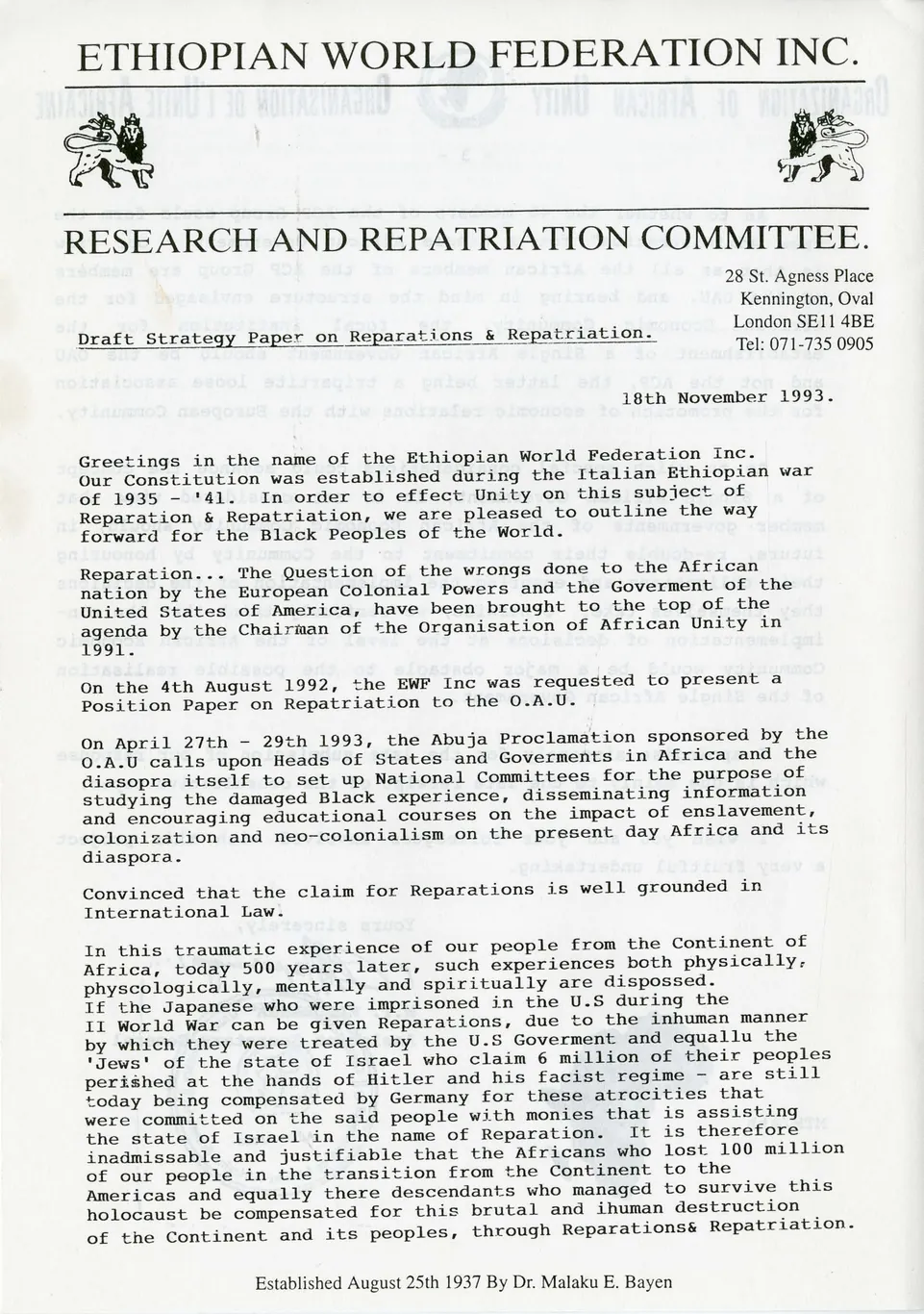
This document is a 1993 draft strategy paper from the Ethiopian World Federation Inc., addressing reparations and repatriation for Black peoples worldwide. It outlines historical injustices linked to colonialism, enslavement, and neo-colonialism, and situates the claim for reparations within international law. The paper emphasizes the need for recognition, compensation, and repatriation as essential steps toward justice and healing for African descendants globally.
Key points:
– The Ethiopian World Federation was founded during the Italian-Ethiopian War (1935–41) to promote unity on reparations and repatriation.
– The Organisation of African Unity (OAU) elevated reparations as a key agenda item in 1991 and called for national committees to address the African diaspora's experiences.
– Comparisons are made to reparations given to Japanese Americans and Holocaust survivors to justify reparations for African descendants.
– The paper emphasizes the long-lasting physical, psychological, and spiritual harm caused by enslavement and colonization over 500 years.
– The strategy highlights the loss of an estimated 100 million Africans during the transatlantic slave trade and demands compensation and repatriation.
This document reflects early 1990s pan-African and Black British activism that linked local and global struggles for racial justice. It corresponds to broader Black British political efforts, including those championed by figures like Bernie Grant, who advocated for anti-racism, reparations, and international solidarity. The Ethiopian World Federation's work contributes to ongoing campaigns for recognition of colonial legacies and racial reparations in local government and political movements.
Source note: The OCR transcript shows some typographical irregularities and unclear words, but the overall content and message remain intelligible. Interpretations focus on clearly presented historical facts and claims.
Archive Metadata
