
Back to Politics: Local and Central Government
Council Leader
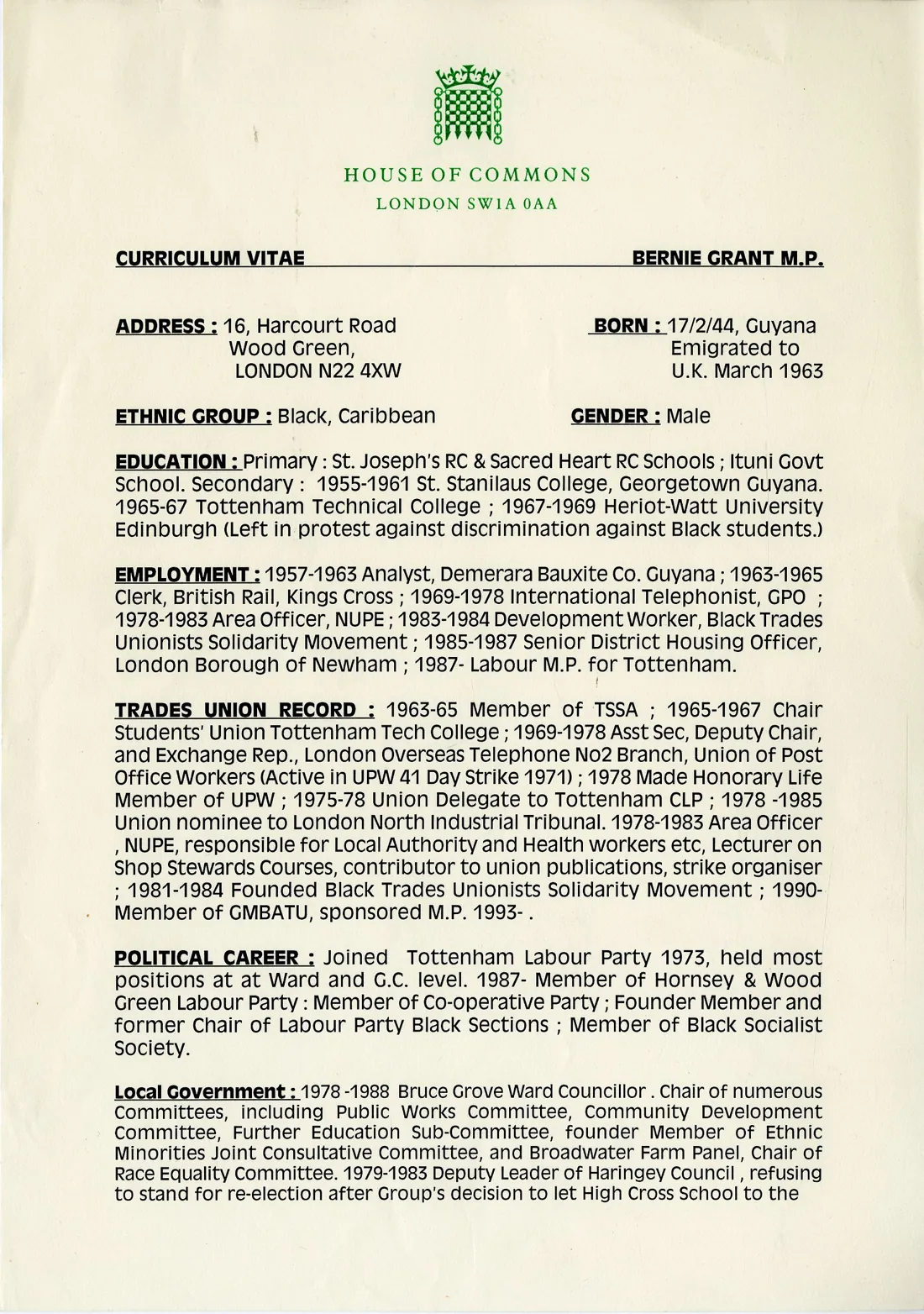
Grant’s challenges to ingrained unfairness in the council’s systems, put him at odds with the council leaders and Labour Group, he spoke out about the council’s bureaucracy and “institutional racism” at a time when this term was not in widespread use, and suffered attempts at being ousted from various committees by the council leaders. Grant served as Council Deputy Leader from 1979 until 1983, when he resigned in protest at the council’s decision to allow the National Front to use the High Cross School in Tottenham for a meeting, a decision which Grant believed encapsulated the council’s institutional racism as referred to in his resignation letter.
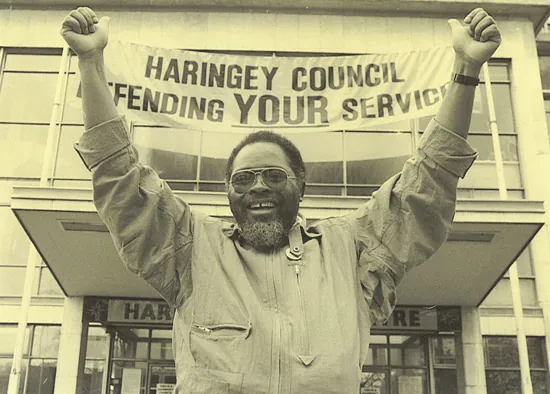
When Thatcher’s government introduced the policy of rate-capping for councils in 1984, Grant led the campaign against it in Haringey, which cemented his reputation as a leading force in the local council. The campaign, which was supported by a majority in the Labour Group, resulted in the resignation of the Council leader and deputy leader, who supported giving in to the rate-cap. As a result , in 1985, Grant was elected leader of the Council, and he made history as the first ever Black leader of a local authority not only in Britain but in the whole of the European continent.
BG_P_4_4_5 Council institutional racism
This document is an excerpt from BG_P_4_4_5 exploring issues of institutional racism within Haringey Council and highlighting the experiences of Adrian Roxan, a Labour Party member facing opposition after challenging party and council prejudices. It is useful for understanding the racial and bureaucratic challenges faced by activists like Bernie Grant and allies in their campaign for racial equality and social justice within local government structures.
Upon his election as council leader, Grant was asked what his priorities would be, to which he responded: “Issues concerning race, women and youth. Not in any particular order, because they are all important, and, of course, all interrelated – we have thousands of young black women, for example”. This period in Haringey Council’s history reflects the tension between the Conservative government, led by Margaret Thatcher and many inner city local authorities in the 1980. One of the main contentions was the financial restrictions on local councils and legal changes attempting to limit the remit of local authorities. This generated widespread community protest and support for local politicians seeking to resist the cuts in spending implied by these policies. At a time when Haringey Council was seeking to empower communities by involving them in their local services, and supporting a thriving voluntary sector, Thatcher’s government sought to restrict local government. As Grant explained: “We would have local services run by people with decentralised committees in their own neighbourhoods, and borough-wide we would have policy committees organised in the right way to give those local people and committees what they need”.
Bernie Grant saw in local government the means by which both he and those he represented could sit at the table where significant decisions were made. He believed that when marginalised people could influence the exercise of the considerable powers and resources of local council, change would take place. Once in office he therefore focussed intently on ensuring that both the Council’s staff, more accurately reflected the community it served, and that services themselves reflected the diversity of the experience of that community.
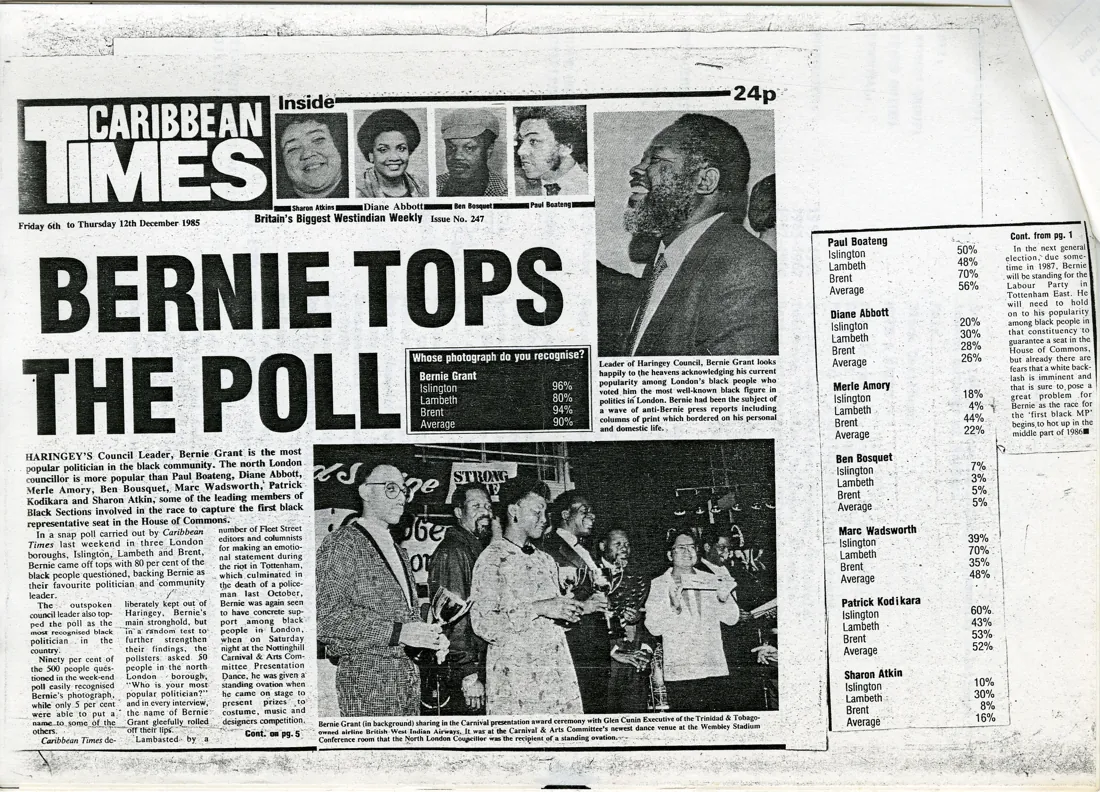
As Council Leader, Grant’s standing within the Black community continued to increase, especially in the aftermath of the October 1985 Broadwater Farm disturbances, when Grant came to the defence of young people and aired their grievances with societal injustices. Before this, Grant was not yet the nationally recognised figure that he would become. His popularity as a voice for Black people in Britain also skyrocketed after this. In a December 1985 poll conducted by the Caribbean Times , Grant was voted the most popular politician in the Black community, winning 80% of the votes.
BG_P_4_4_10
This document is an edition of Haringey’s civic newspaper, The Star, from 1985, reporting on key political changes including Bernie Grant’s election as Britain’s first black Council Leader and the Council’s leftward shift in resistance to government ratecapping and service privatisation. It is valuable for understanding Grant’s leadership priorities and the local Labour campaign’s focus on defending public services, promoting equality, and supporting disadvantaged groups in Haringey.
