
Curated page
Reparations
The movement for African Reparations is a broad, longstanding, global movement. Reparations as a term is Latin in origin, meaning to ‘repair’ or ‘restore’. The movement for African Reparations therefore seeks justice for the crimes which have been committed against Africa, Africans and people of African descent over the last 500 years. Reparationists argue for the need to address, acknowledge, and repair the damage caused by European and Western powers, from the infamous human trafficking of enslaved Africans (commomly referred to as the Slave Trade); the Scramble for Africa and subsequent colonisation of the African continent and its people; the psychological, economic and political impacts of racism; the persistence of anti-Black and anti-African racism today; and the insidious presence of neo-colonialism in Africa and the Caribbean. Campaigns for African Reparations have taken many forms throughout history. In the UK, although reparations-related activism has existed for a long time in anti-racist, Black Power and civil rights movements, it took a more organised form from the late 1980s onwards, as argued by leading Reparationist and scholar Esther Stanford-Xosei. That being said, demands for reparations can be traced all the way back to the eighteenth century in the considerations of abolitionist Ottobah Cugoano in his publication, Thoughts and Sentiments on the Evil of Slavery. Examples of calls for Reparations during the early 20th century include those made by W.E.B Du Bois throughout the series of Pan-African congresses from 1919-1927, and in Marcus Garvey’s request to the League of Nations for the creation of an African State from Germany’s confiscated colonies in the aftermath of the First World War.
BG_ARM_1_4-The-African-Reparations-Movement-A-Call-as-old-as-Justice-1
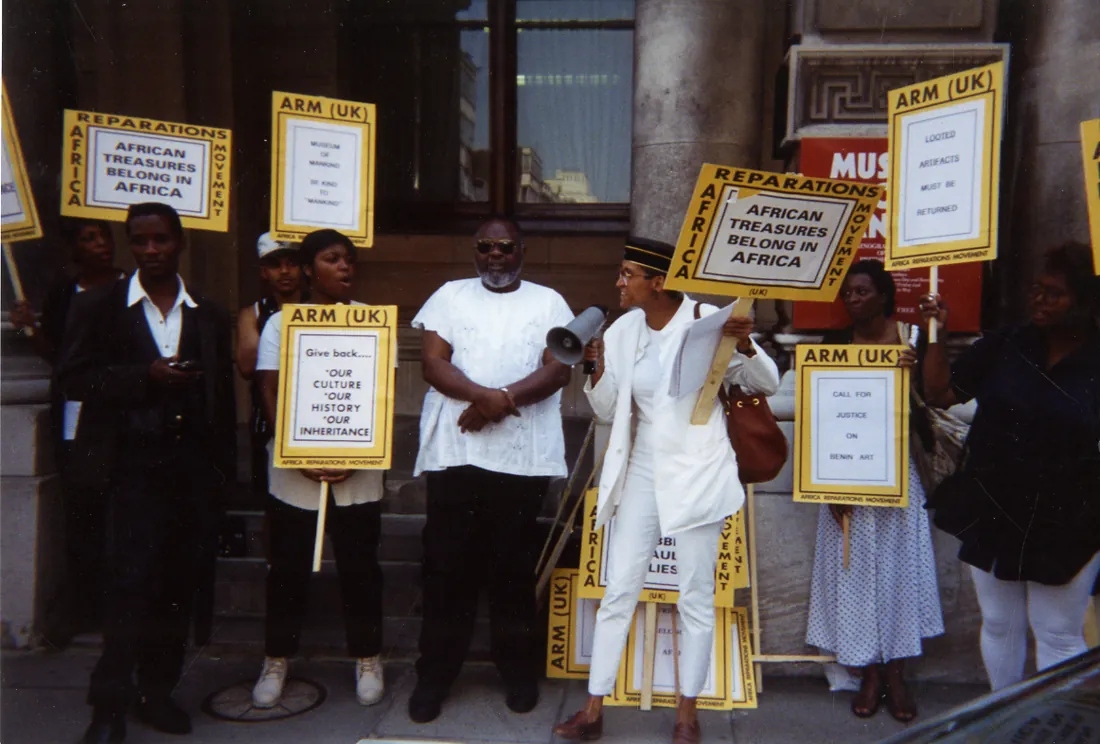
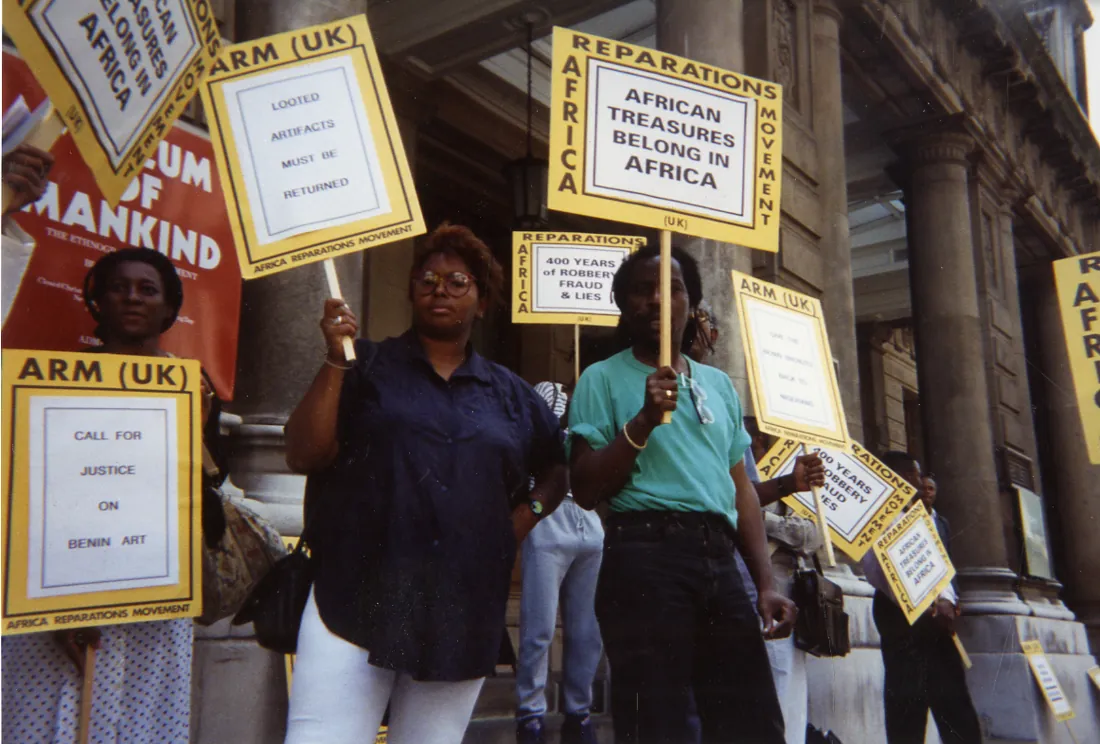
Throughout the mid-late 20th century, Civil Rights and Black Nationalist organisations also argued for the need for Reparations, including the Nation of Islam in the 1940s, and the Civil Rights Congress who in 1951 presented the United Nations with a case entitled ‘We Charge Genocide: Relief from a Crime of the United States Government against the Negro People’. Not long after this, in 1955, the Reparations Committee for United States Slaves’ Descendants was founded by Audley Moore, known widely as Queen Mother Moore. This group sought “relief in money damages for the victims of these injustices with which to begin a program of rehabilitation”. The development of the Rastafari movement is a key illustration of ‘unofficial’ Reparations activity, with emphasis on repatriation to Africa in both the physical and spiritual sense. On the African continent, there is also a long history of campaigns for Reparations, notably the work of Nigerian scholar Ekpo O. Eyo, who tirelessly campaigned for the restoration of African artefacts held by museums and private collections in the West. Arguments for Reparations go far beyond calls for financial compensation, and this is easily proven by examining Britain’s Reparations movement, and Bernie Grant’s pioneering activism in this field. One of the most significant milestones in Britain’s history of organising for African Reparations, was the founding of the African Reparations Movement UK (ARM) in 1993. It was established at the behest of Bernie Grant, who was joined by Linda Bellos, Sam Walker, Stephen Small, Dorothy Kuya and many others. ARM was officially launched at the Birmingham Conference on Reparations held on December 11th 1993 which was entitled ‘What Do Reparations Mean?’. The Birmingham Conference was itself a result of Bernie Grant’s involvement in the First Pan-African Conference on Reparations, held in Abuja, Nigeria, in April of 1993. Throughout its lifespan, and under Grant’s chairmanship, ARM took up many issues and topics, and sought to build a substantial movement in Britain to campaign for African Reparations, whilst building and maintaining links with the global Reparations movement. Some of the extensive work of ARM included holding public meetings and events to raise awareness of Reparations, its meaning and importance, conducting research on the impact of slavery, colonialism, and neo-colonialism especially as it pertained to Britain’s involvement, campaigning around education and the inclusion of Black history and heritage, demanding the repatriation of stolen or misappropriated artefacts from Britain’s museums and galleries, and more. As a Member of Parliament, Bernie Grant tabled an Early Day Motion on 10th May 1993, welcoming the Abuja Proclamation. This Proclamation had been drawn up as a declaration of the First Pan-African Conference on Reparations in Nigeria earlier that year. The Early Day Motion received 63 open signatures from other MPs, and provided publicity and media coverage for the issue of Reparations. Bernie Grant’s individual work around Reparations in his capacity as an MP was interlinked with the work of ARM, which played a vital role in strengthening Reparations-centred activism in Britain, and of course these were interlinked. However, after Grant’s passing in April 2000, ARM ceased activity and the wider Reparations movement in Britain lost a leading figure. Despite this, Grant’s legacy and that of the ARM can be seen in the ongoing Reparations campaigns in Britain, which have been sustained by a number of events, organisations and committees, from grassroots community groups to parliamentary action, and cross-collaborations between the two.
Reparations today
Britain’s Reparations Movement, although heavily impacted by the passing of Grant and ceasing of ARM’s activities, continues today. One interesting development in the movement has been the continuing visibility of women activists, often at the frontlines of Reparations organising. Bell Ribeiro-Addy, who became a Member of Parliament in 2019 -, took up the baton as a Reparationist voice in the House of Commons and within British Parliamentary activities. paying tribute to Grant. In April 2023, in the same month as the 23rd anniversary of Grant’s passing, Ribeiro-Addy asked the British Prime Minister Rishi Sunak for an apology for Britain’s role in slavery and colonialism. Alongside others, Ribeiro-Addy also helped to organise the inaugural UK Reparations Conference in October 2023. Esther Stanford-Xosei has been a leading figure in Britain’s Reparations Movement for decades, and was a mentee of Grant’s. She has established and chaired many Reparations-focused groups and committees, and alongside others heads the Stop the Maangamizi Campaign. Today, much of Britain’s Reparations activism takes into account the connected issue of climate change and ecocide as part of the legacy of enslavement, colonialism and imperialist capitalism.
External links:
Stop the Maangamizi Campaign website https://stopthemaangamizi.com/ Bell Ribeiro-Addy requests apology for Slavery and Colonisation on 23rd anniversary of Bernie Grant’s passing https://www.youtube.com/watch?v=FvmujD8h3kw Ras Seymour Mclean: book liberator http://www.rastafari-in-motion.org/book-liberator.html#:~:text=The%20Book%20Liberator,at%20a%20place%20called%20Maqdala. “We Shall Be Telling Our Own Stories” https://www.cairn.info/revue-politique-africaine-2022-1-page-143.htm#no29 Bernie Grant asks Tony Blair for apology for slavery and colonisation, 29 November 1999 https://api.parliament.uk/historic-hansard/commons/1999/nov/24/engagements#S6CV0339P0_19991124_HOC_71, https://www.youtube.com/watch?v=d4a74NC6aQA The Independant, ‘Grant Isolated over Repatriation’, https://www.independent.co.uk/news/uk/grant-isolated-over-repatriation-parties-distance-themselves-from-black-mp-s-comments-will-bennett-and-colin-brown-report-1509086.html Hansard – Caribbean Voluntary Resettlement Adjurnment Debate https://hansard.parliament.uk/commons/1995-12-19/debates/df33c33f-1f2d-4bf7-96f0-c816a4bc3b72/Caribbean(VoluntaryResettlement)
